Day 2 - Work From Farm Week
Modern work culture has spent decades pretending that the body is irrelevant to professional performance.
We sit for eight hours, we stare at screens and we mistake mental exhaustion for hard work and call physical inactivity a sign of intellectual sophistication.
In our case, the group assembles men and women who arrived with their laptops, their to-do lists and they work out together.
Partner carries across the compound, running drills across the open farmland.
Bodyweight exercises performed as a unit, in full view of one another, with no rank or title to hide behind.
When you carry a colleague on your back across a stretch of bare ground, you are learning something about load distribution about how teams share weight, how leadership sometimes means bending low enough for others to climb on, and how the person being carried has an equal responsibility not to make themselves dead weight.
These are lessons that translate directly to every professional environment.
They just happen to be taught more effectively when your boots are in the mud and your lungs are working.
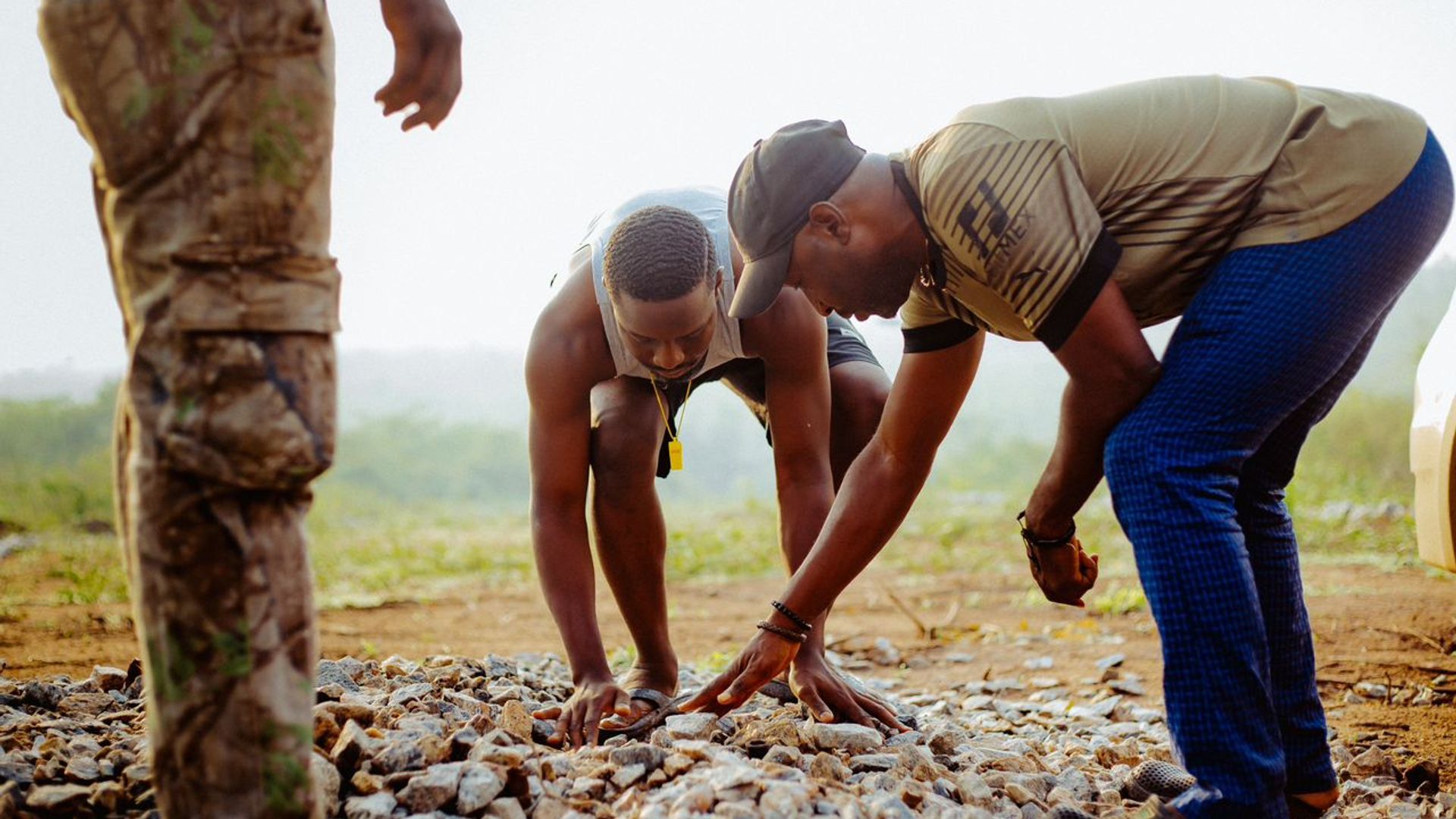
Staff participating in farm work
Staff are taken to the growing beds, where drip irrigation lines thread through rows of young seedlings pushing up from the brown soil.
In this setting, staff kneel, bend, and crouch along the planting rows, hands in the soil, learning how to plant correctly.
The scenes are instructive.
You can see a person at the irrigation line, fingers pressing a seedling into the earth while colleagues look on and assist.
Others bend at the waist, making holes in the soil at precise intervals, following the grid established by the drip lines.
Someone else positions a seedling with the kind of careful attention that farming demands and that most professional environments never cultivate.
There are several things happening here simultaneously, and every one of them matters.
Firstly, staff are learning the actual mechanics of crop establishment how deep a hole should be, how to handle a young plant without damaging its roots, how to work with a drip irrigation system rather than against it.
Secondly, and perhaps most importantly, staff are learning collective precision.
Farming in rows is a team exercise.
One person off-line, one seedling too shallow or too deep, affects the entire bed.
The group on the planting row must coordinate, communicate, and maintain standards together.
This is exactly what high-performing teams must do in every context.
We learned beyond farming bed
Day 2 also takes us beyond the planting beds.
A facilitator leads these walks, explaining the decision-making behind every structural choice.
Why is the drip line at this particular spacing? Why is this crop section positioned to catch morning sun rather than afternoon sun? Why are these beds mulched while those are not?
By the time Day 2 of Work From Farm Week draws to a close, we have experienced more variety of meaningful activity than most professionals experience in a month of standard workdays.
We have exercised before sunrise, we have sat in structured learning sessions.
We have walked the land, we have planted with our hands.
Plus we have eaten and rested together.
But beyond the activity log, something more significant has occurred.
We have re-learned the relationship between effort and outcome that results are not delivered by systems but by people willing to stay consistent.
We have experienced the dignity of physical work, which is the kind of dignity that no salary scale or job title can manufacture.
Plus, we have seen what it means to build something that feeds people literally, nutritionally, and economically.