
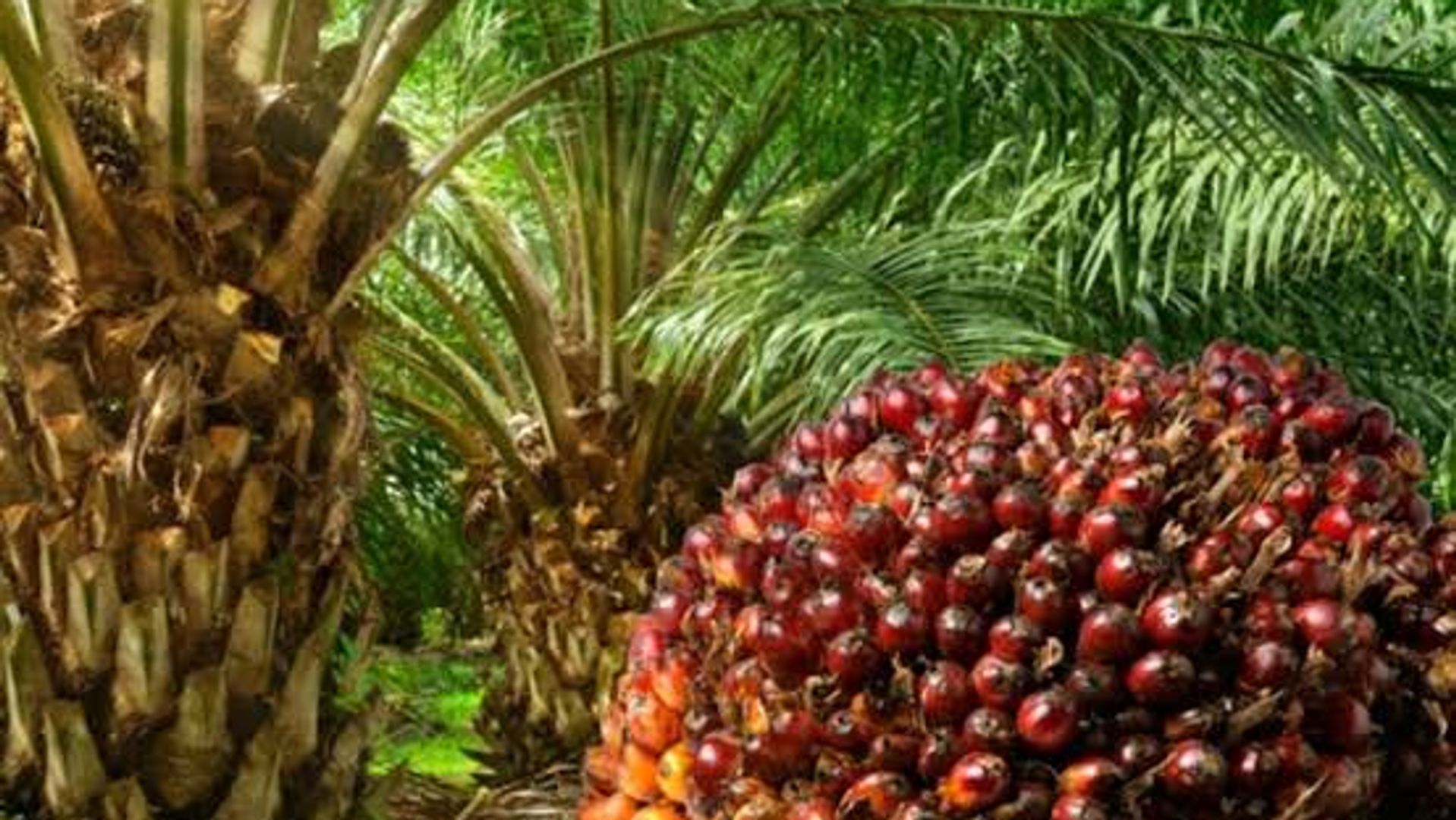
All You Need To Know About Oil Palm Plantation Scheme in Paradiso Farm
If you own land under the Paradiso Farm Timeline, there's a new opportunity worth paying close attention to.
Today, I'll walk you through what it actually involves, why it matters, and what you can expect if you decide to get on board.
Why Oil Palm, Specifically?
Nigeria has a long history with oil palm, and honestly, it's one of the smartest crops you could put your money behind right now.
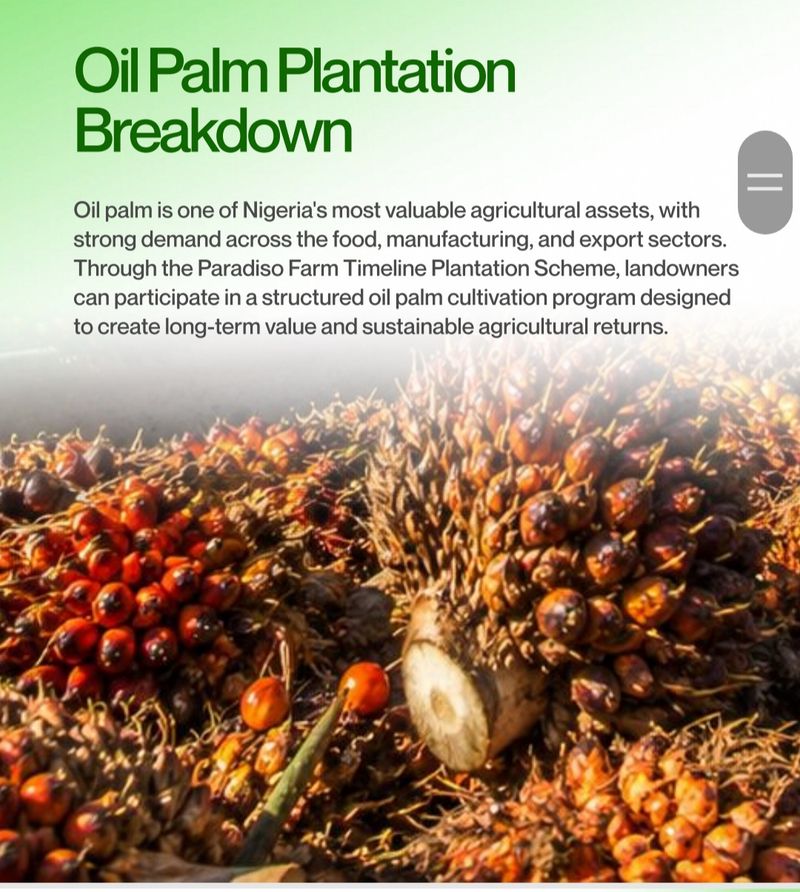
Plus, oil palm has staying power because it feeds into everyday food production, and it holds strong demand in export markets too.
That's why the thinking behind the scheme is simple...
Instead of your land just sitting there as a static asset, why not put it to work generating an income stream?
An Exclusive Opportunity for Existing Owners
First of all, you need to understand this scheme isn't a public offering anyone can walk into.
We reserved it for people who are already Paradiso Farm Timeline owners.
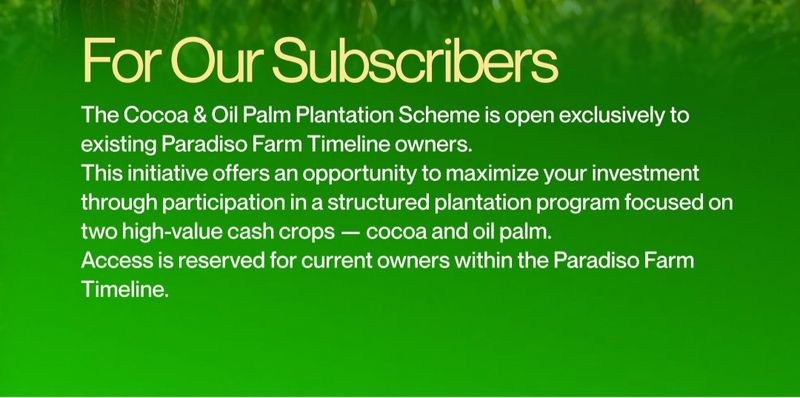
If you've already bought into the Timeline, this plantation scheme is essentially a reward and an extension...
And guess what, it doesn't stop at oil palm alone...
The scheme actually bundles two high-value cash crops together(cocoa and oil palm) giving subscribers a chance to diversify their agricultural portfolio within a single structured program.
No doubt...
Both crops have solid track records as export commodities, so pairing them together is a deliberate strategy to spread risk and maximize the earning potential of every plot.
Setting Realistic Expectations on Yield
One thing that stands out in how our scheme is presented is the honesty around yield expectations.
Rather than promising a single guaranteed number, the projections are broken into three tiers...
Thats, below expectation, expected, and above expectation which makes a lot of sense given how many variables affect agricultural output.
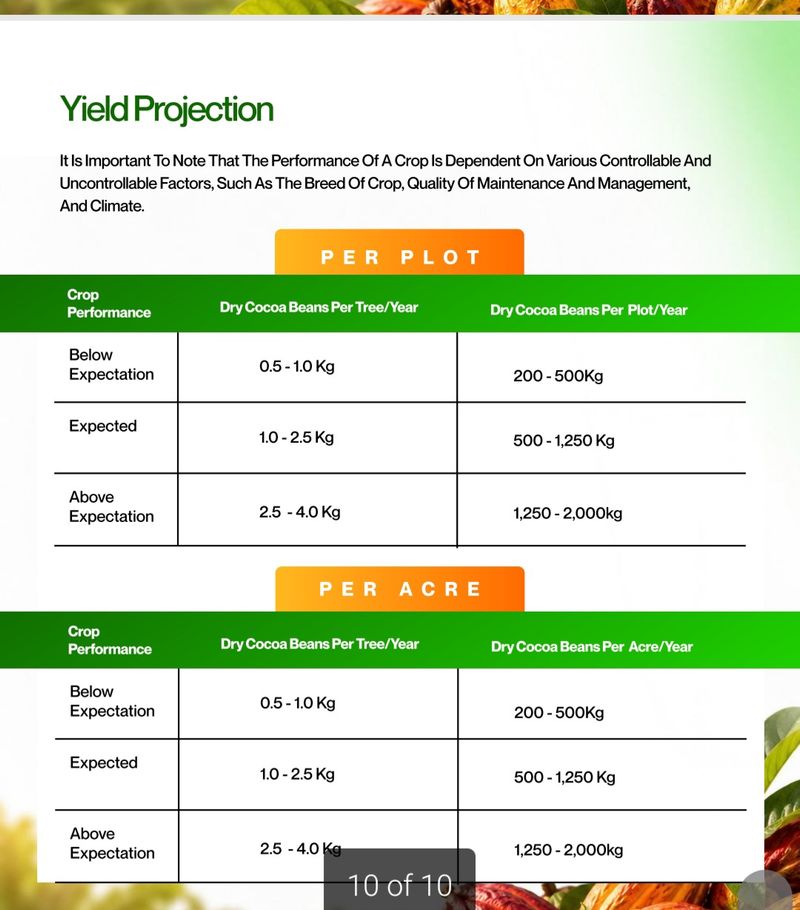
Also, the breed of crop, the quality of maintenance, and the climate all play a role in how any given plot performs in a given year, and no responsible scheme should pretend those variables don't exist.
For example, under the expected performance tier, cocoa yields are projected somewhere in the range of 1.0 to 2.5 kilograms of dry beans per tree annually, which scales up to roughly 500 to 1,250 kilograms per plot per year.
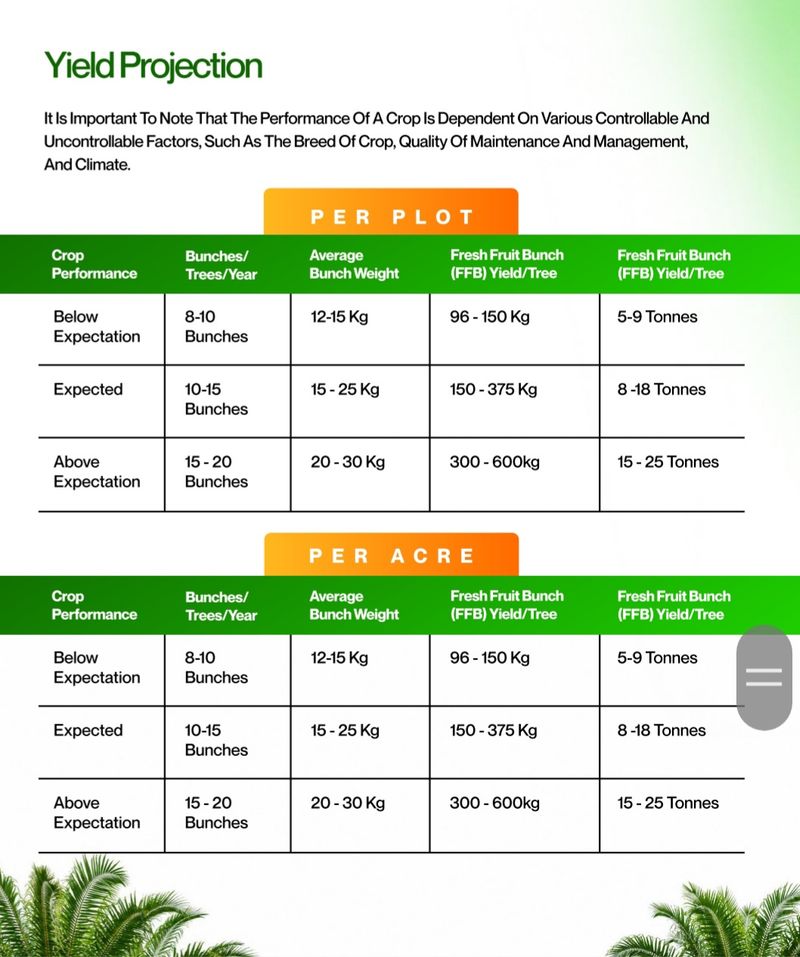
On the higher end of performance, that range can climb up to 1,250 to 2,000 kilograms per plot annually.
These aren't wild, speculative promises, they're presented as a realistic band of outcomes, which is a much more trustworthy way to communicate returns than a flat, guaranteed figure.
What About Costs?
On the financial side, maintenance costs are kept notably lean, and there's a specific reason for that.
For us, the maintenance cost has been subsidized...
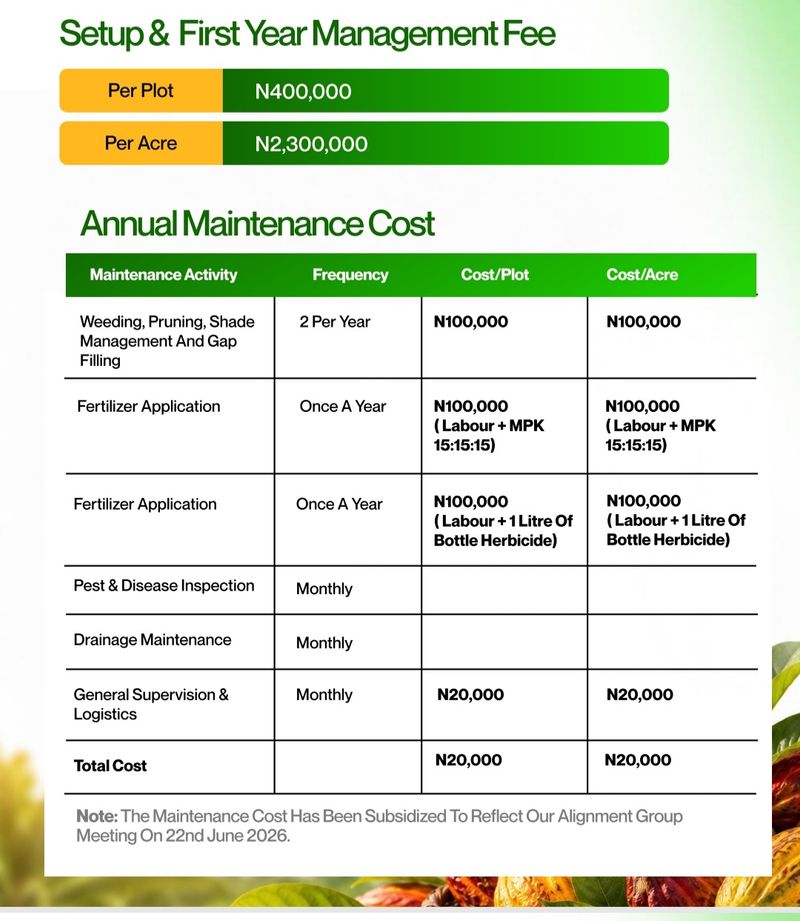
In practical terms, that means subscribers are benefiting from reduced ongoing costs, because we have negotiated better terms or absorbed part of the expense on behalf of participants.
For anyone weighing whether the ongoing costs of a plantation are worth it, that subsidy is a meaningful point in the scheme's favor...
That means lower recurring costs mean more of the eventual harvest revenue stays in your pocket.
The Bottom Line
If you're already a Paradiso Farm Timeline owner, this scheme is worth serious consideration.
It takes land you've already invested in and gives it a productive purpose, backed by a structured, professionally managed process...
Plus, the involvement of Kokoavest as an official partner adds a layer of credibility that's hard to overlook, especially in an industry where execution quality can make or break returns.
In case you missed it: Agrolocale officially partners with Kokoavest
And with realistic, tiered yield projections and subsidized maintenance costs, the scheme seems designed to set expectations honestly rather than oversell what agriculture can deliver.