How To Plant Tomatoes for Harvest
Tomatoes get more questions than any other plant on our farm, and most of them come down to six fixable habits...
Which type, what to grow them in, how deep to plant, how often to water, when to prune, when to pick.
Get those right and your harvest stretches for months instead of weeks...
Plant your tomatoes in good soil structure
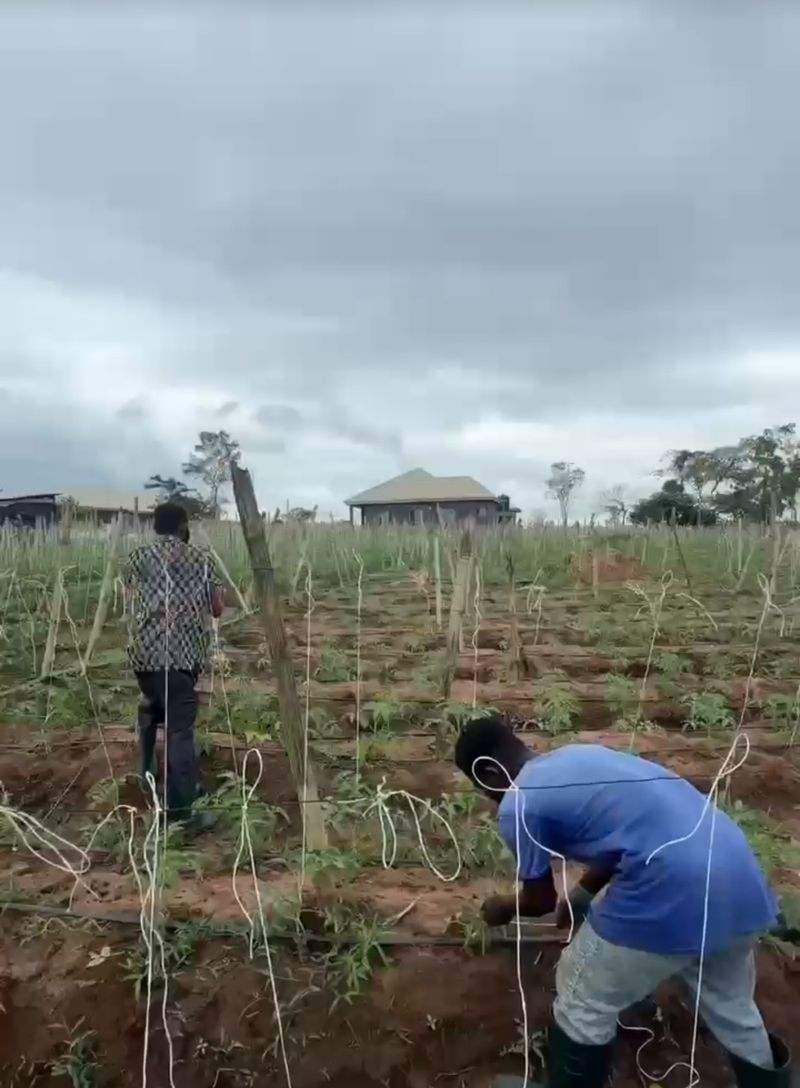
Tomatoes are heavy feeders with deep, hungry roots, and they will tell you immediately if the soil underneath them is compacted or waterlogged.
When you see stunted growth, fruit that splits after a rain, even when you're watering consistently, a lot of that traces straight back to soil structure rather than a nutrient problem.
Before we plant a single seedling, we work in a heavy dose of finished compost and make sure the bed drains.
Tomatoes hate wet feet as much as they hate drought.
In case you missed it: https://agrolocale.com/blog/Tomatoes
You'll need to plant deep
This is the tip that surprises almost everyone the first time we mention it.
Those little fuzzy hairs running up the stalk aren't decoration; they're root nodes waiting to activate underground.
So when we transplant, we strip the lower leaves off the seedling and bury two-thirds of the stem, sometimes more, leaving just the top set of leaves above the soil line.
A leggy, six-inch-tall seedling that looks a little sad in its nursery pot can go into the ground with only two inches showing above the surface.
You see, that buried stem turns into a much larger root system than the plant would ever build on its own, which means a sturdier plant, better drought tolerance, and more resilience against the wind and storms we've dealt with in every climate we've farmed.
You need to water, not shallow and often
We used to water tomatoes the way we watered everything else on the farm, a little bit, every day, whenever the top inch of soil looked dry.
When you shallow and frequently water your crop, it trains its roots to stay near the surface, where they're more exposed to heat and drought stress.
It also sets you up for blossom end rot, because inconsistent moisture is one of the biggest triggers for that dreaded black, leathery spot on the bottom of an otherwise perfect tomato.
Now we water deeply, less often, aiming to soak the soil down six to eight inches and then let it dry out somewhat before watering again.
That helps push roots down deep where the soil temperature is more stable, and it's made our fruit far less prone to cracking and rot...
Feed for fruit, not just for leaves
Tomatoes need nitrogen to build the plant, but pour it on too heavily, and you'll get a gorgeous, dark green, leafy plant that produces almost nothing.
We made this mistake more than once, especially in our early years, when we assumed more fertilizer always meant more tomatoes.
These days we go lighter on nitrogen once flowering starts and lean instead on phosphorus and potassium, which push energy toward blooms and fruit rather than foliage.
A balanced organic fertilizer at planting time, followed by a potassium-rich feed once the first flower clusters appear, has done more for our yields than any amount of extra nitrogen ever did.
If your tomato plant looks like a small tree and produces a handful of fruit, this is almost always the reason why.
Prune with intention
This intimidates a lot of growers, and we get it...
It feels like you're cutting away potential fruit.
But an unpruned indeterminate tomato turns into a dense, tangled mess that traps humidity against the leaves.
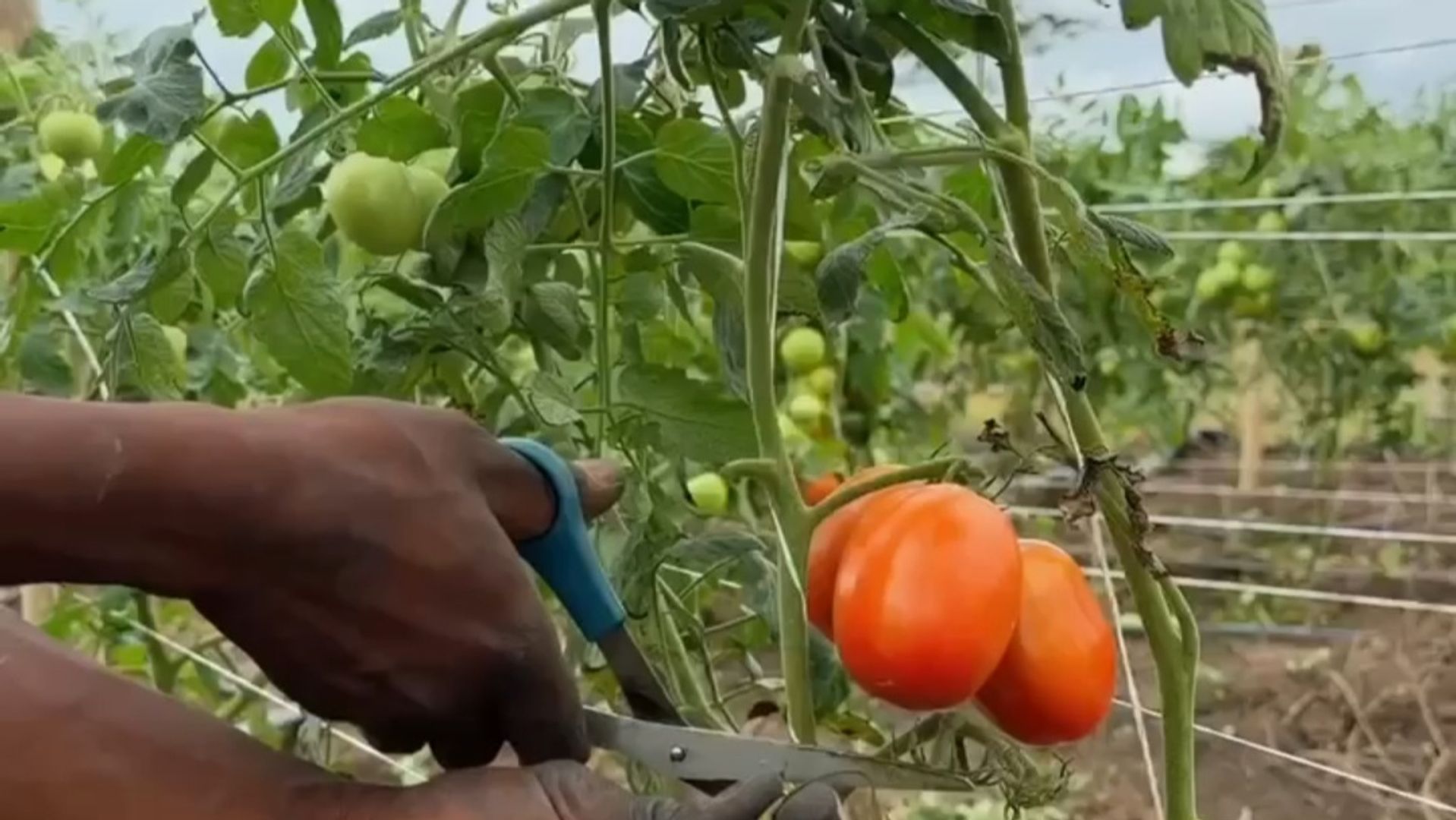
We prune suckers, the little shoots that pop up in the crotch between the main stem and a branch, especially low on the plant where airflow matters most and where fruit is more likely to touch the ground anyway.
We also strip off any leaves touching the soil, since that's the most common entry point for soil-borne fungal spores splashing up during watering or rain.
We don't prune determinate tomatoes nearly as hard, since removing too much growth on a bush type can cost you real yield, but on our indeterminate plants, a little intentional pruning every week keeps the whole plant healthier for the whole season.
Pick a little early instead of a little late
This is the one that took us more than five years to figure out, and it's actually simple once you know it.
We used to leave tomatoes on the vine until they were fully, deeply red, assuming that meant peak flavor.
What it actually meant was a race against birds, splitting skins, and fruit that went from perfect to overripe in a single hot afternoon.
Now we pick as soon as a tomato reaches the breaker stage or just past it, mostly colored, with a slight give when you press it gently, and let it finish ripening on the counter out of direct sun.
The flavor difference is negligible, but the practical difference is enormous.
Fewer tomatoes split after a sudden rain.
Fewer get discovered half-eaten by birds or squirrels the morning after they turned perfectly red.
And picking a little early actually signals the plant to keep producing, because a tomato left too long to fully ripen and soften on the vine slows down the whole plant's fruit set.